
Immigrants want to learn Icelandic, but funding is scarce.
A new OECD review of the situation of immigrants in Iceland specifically calls on the government to strengthen Icelandic language teaching to better promote the participation of immigrants in society. Around 18 per cent of immigrants consider their Icelandic skills to be good, which is an extremely low proportion compared to the language proficiency of immigrants in other OECD countries. Furthermore, public funding for Icelandic language teaching in Iceland is much lower than for mother tongue teaching in other Nordic countries.
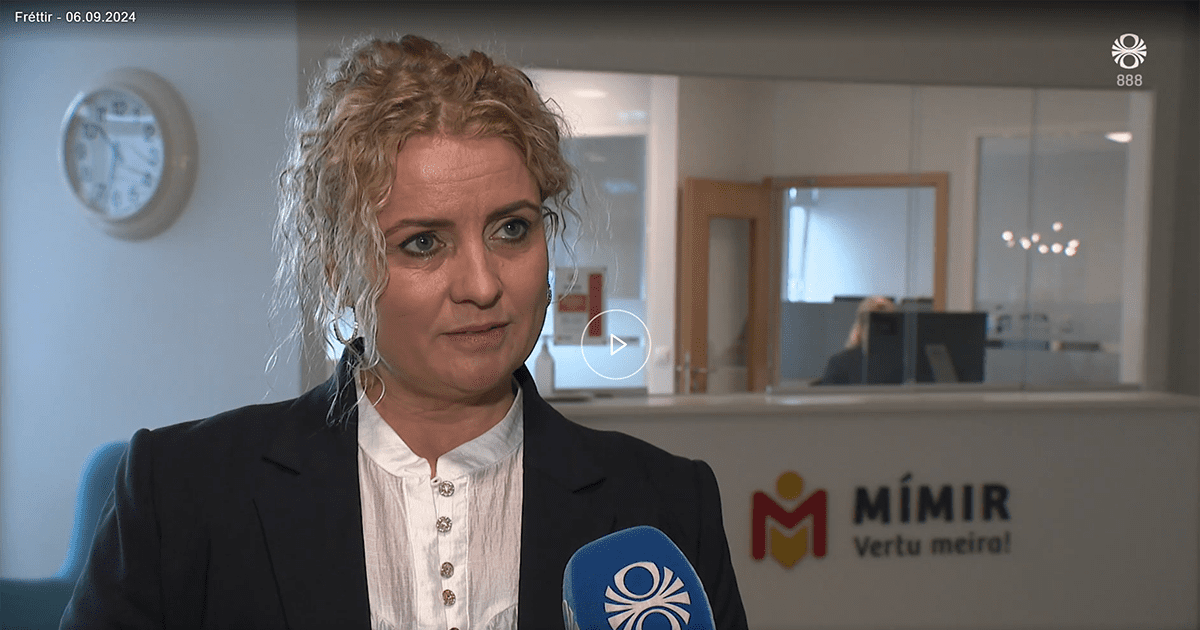
„The demand has been huge and it's increasing year on year. Last year, around two thousand people attended our courses. It's not just individuals; workplaces are also getting on board. So you could say there's a growing awareness in the community, which is very pleasing,“ says Sólveig Hildur Björnsdóttir, managing director of Mímir, in the RÚV television evening news on Friday, 6th September.
A community project
Sólveig welcomes the strategic work currently underway by the government regarding immigrants and hopes that it will result in increased funding from the state.
„It's possible to do better. A lot of good is done. However, for example, the funding allocated for Icelandic language teaching at Mímir is about to run out this September. So unfortunately, individuals and workplaces alike will have to wait until January if funding is not secured. The need is great. The will is there, and we must seize it,“ says Sólveig.
Sólveig urged Icelanders to speak Icelandic with those who want to learn the language, instead of immediately switching to English. The entire community has a role to play in enabling immigrants, whose mother tongue is not Icelandic, to acquire proficiency in Icelandic.