
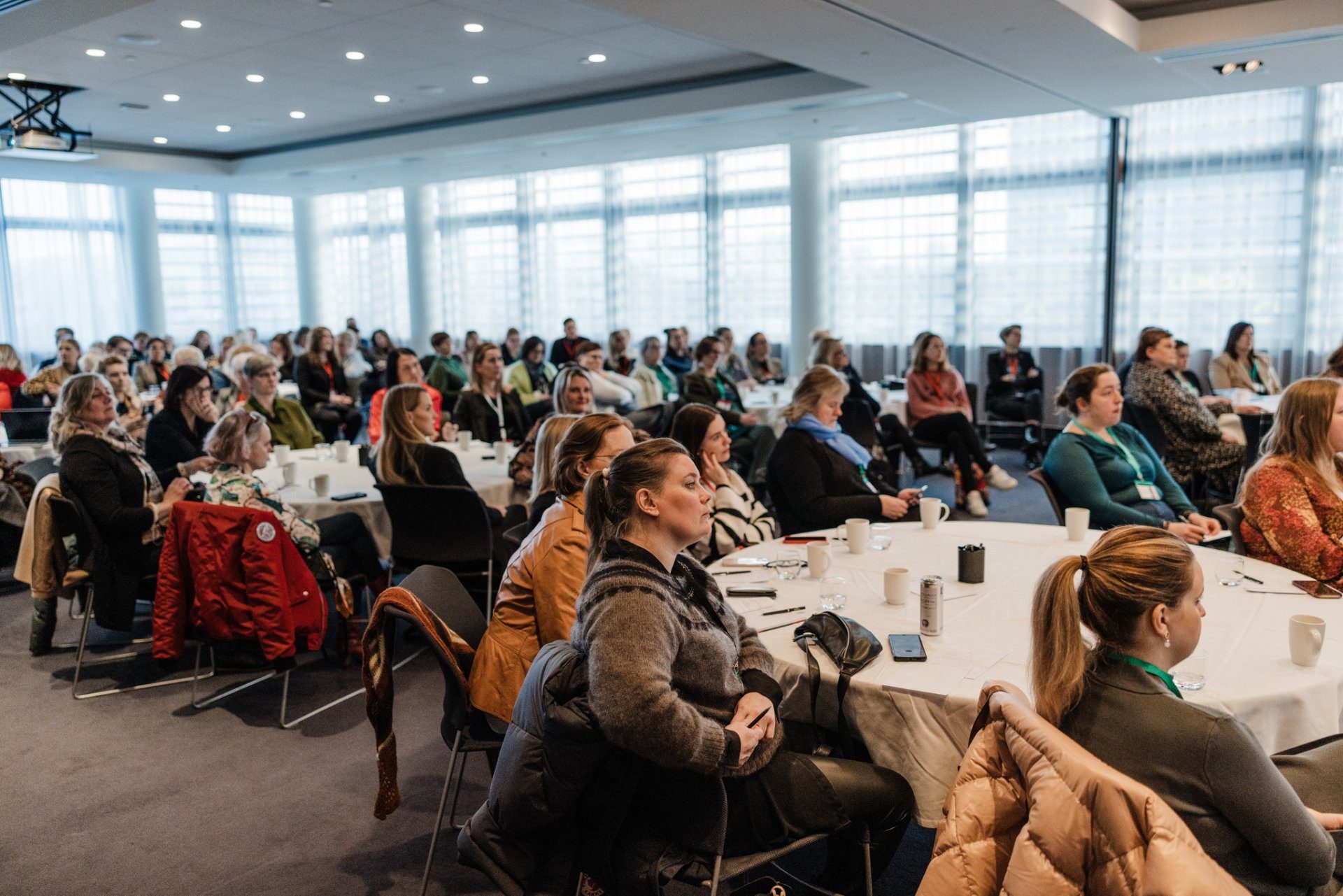
Crowd at the conference: We work in Icelandic
Mímir-símenntun and the Icelandic Trade Union Federation held a conference yesterday, on Thursday, 29 February, which was entitled We work with Icelandic. Around 120 people attended the conference, where the focus was on creating a strong learning community for immigrants' Icelandic language learning.
As the participation of immigrants in the Icelandic labour market increases, the need for targeted Icelandic language teaching becomes ever greater. The conference focused on the main challenges for society and the labour market when it comes to the integration of immigrants and to teaching and learning a new language in a new country.
A number of speakers addressed the conference, but it was opened by Katrín Jakobsdóttir, the Prime Minister.
„The number of people with a foreign background in the Icelandic labour market has increased significantly in recent years. Our task as a society, which welcomes this human capital, must be to reduce obstacles and lower the barriers for those individuals who choose to settle here in the country,” said Finnbjörn A. Hermannsson, President of the ASÍ.
The Executive Director of Mímir, Sólveig Hildur Björnsdóttir, echoed this sentiment: „We are hosting this conference to bring everyone together, including the government, service providers, educational institutions, employers and others concerned with the issue. We want to work together to find common solutions so that everyone has the opportunity to learn the language. Immigrants are a large and indispensable part of Icelandic society. Ultimately, it is the responsibility of us all to create opportunities and reduce the barriers for people to use their knowledge and ability to learn something new, to learn Icelandic and have the opportunity to use it. We can all contribute to creating an encouraging language environment, which is one of the key factors for active participation in Icelandic society. It is not only our duty but also an opportunity to enrich and strengthen society and to combat prejudice and discrimination.”.
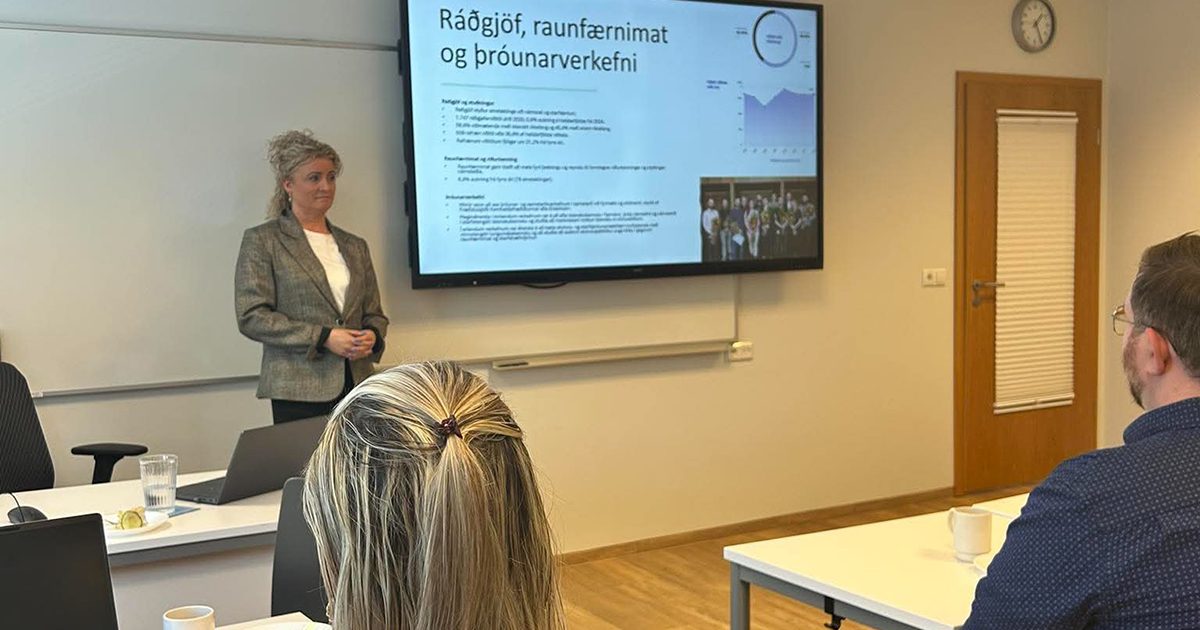
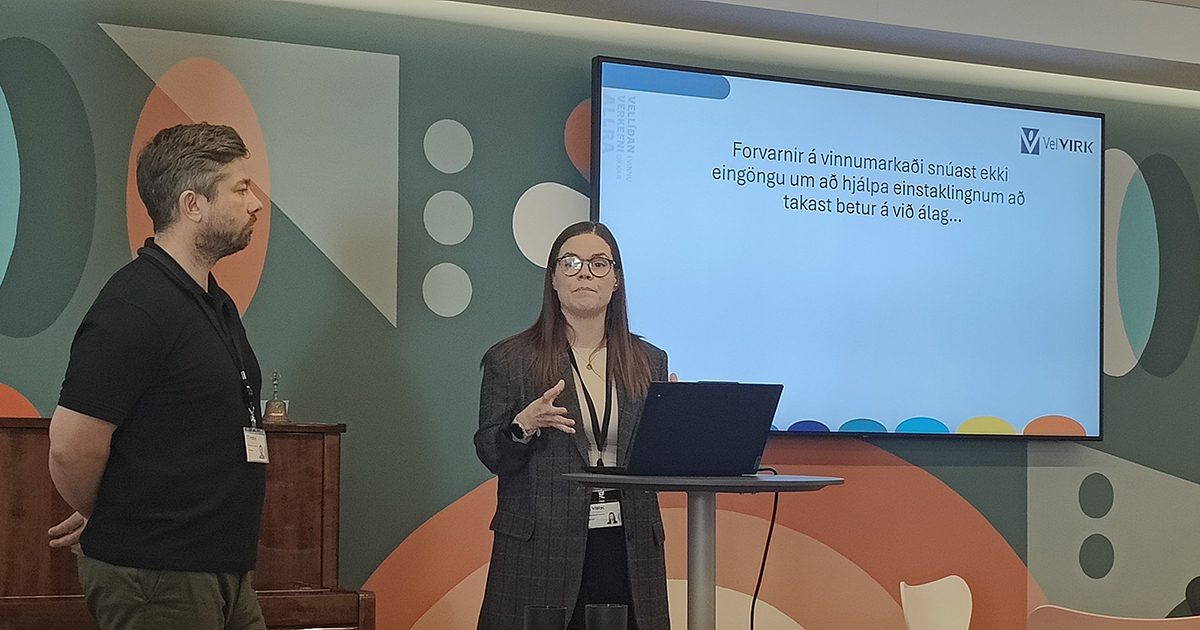
The conference papers were diverse and addressed the subject from different perspectives. Gísli Hvanndal Ólafsson, project manager, and Mirko Garofalo, lecturer in Icelandic as a second language at the University of Iceland, discussed Development project in Icelandic at the University of Iceland. Kristín Heba Gísladóttir, director of Verðmátun – the Research Institute of the Labour Market, went over The position of immigrants in the labour market, Joanna Kleszczewska, a nursery school teacher, spoke about her experience of learning Icelandic, and Joanna Dominiczak, Head of Icelandic Studies at Mímir Lifelong Learning, reviewed innovations and challenges in Icelandic language teaching. In addition, Thomas Liebig, an expert at the OECD, reviewed the OECD's recommendations regarding language training for adult immigrants, and Matilde Grünhage-Monetti, an expert from the Language for Work team at the European Centre for Modern Languages, discussed the experience of other countries, including Germany, with language teaching and inclusion.
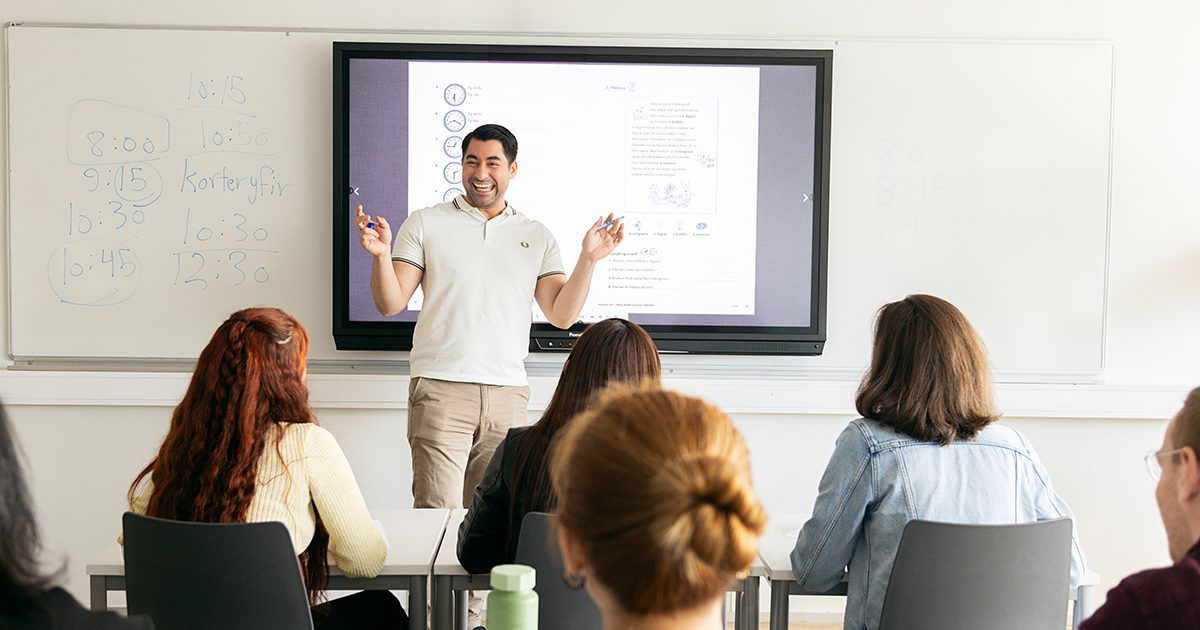
Following the presentations, workshops were held where all conference participants took part in discussions about the philosophy and development of Icelandic language teaching, and how best to teach Icelandic to adults. The findings from the workshops will be used to further develop Icelandic language teaching.
Here are some snapshots. from the conference taken by Laimonas Dom Baranauskas