

Icelandic as a bridge to a better society
An article by Vanessa, a project manager at Mími-símenntun, which shows how crucial it is for workplaces to actively support their staff in language learning – and how Landspítalinn has done so with ambition and success.
———-
At the National University Hospital, hundreds of staff from all over the world meet daily. This is an undeniable strength for us all – without them, our healthcare system simply wouldn't be viable. However, this also brings challenges, particularly when it comes to communication.
Communication is often a sensitive part of the job in hospital, and language skills can be crucial. They have a direct impact on the lives and health of patients. Therefore, proficiency in Icelandic is not just about understanding, but also about safety and professionalism. Proficiency in Icelandic is important in clinical work, for the safe flow of information and in professional assessment – but no less so for being able to show empathy, engage in conversation with relatives and support people in difficult circumstances.
Icelandic and safety in hospital
My experience of organising Icelandic language courses in the workplace has highlighted how crucial structured support for language learning is. Businesses that make a point of systematically supporting such learning are more likely to succeed, and the benefits are numerous. It is important to create a learning community that involves the entire workplace – both those undertaking the course and those who already speak the language. The most important thing is to create a working environment based on respect that motivates staff in their work. Proficiency in Icelandic can be crucial for inclusion, professional competence and equality in the workplace. Furthermore, improved communication skills enhance service and job satisfaction.
These facts are clearly demonstrated in the work we have undertaken with Landspítalinn in recent years. In 2018, Landspítalinn and Mímir-símenntun began a partnership on a targeted Icelandic language course for the hospital's staff, and since then, over 1,500 people have attended such a course. It has been a real joy to see the staff's confidence and communication skills increase – but most of all, the bonds between people working together in challenging circumstances have been greatly strengthened.
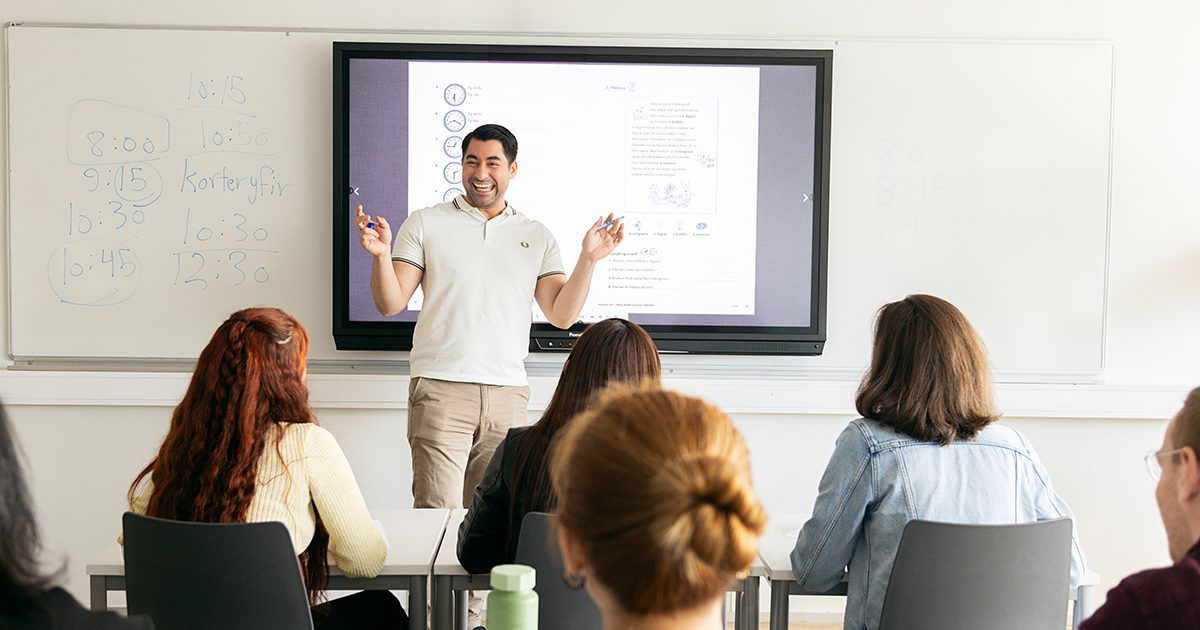
During this time, we have all learnt a great deal – both the management and staff of the hospital, the teachers and the organisers of the course. For the most part, the courses were held at the Mímis premises, which created challenges for the students. It was therefore decided to move the teaching to the National University Hospital, and with that, the project was transformed. The course became more accessible and the teaching became a tangible part of the workplace culture.
It is also important that the workplace sends a clear message that language teaching is not a secondary matter, but part of professional development. The Landspítalinn has therefore set itself the ambitious goal that new staff will reach a B2 level in Icelandic within two years of their appointment. To make this realistic, the teaching takes place on the hospital's premises, during working hours, and shift patterns are adapted as far as possible.
This is supporting the staff in a real way – which results in greater quality and safety in the workplace and an improved quality of life for the people themselves.
Key to a better society
Experience shows that targeted support for staff's language skills pays dividends many times over. Strengthening Icelandic facilitates collaboration, reduces the risk of misunderstandings and enhances staff's ability to provide good service. This is without counting the benefits for the individual and society as a whole, when people from diverse backgrounds are given the opportunity to take an active part in society.
The National University Hospital has shown that the workplace itself can be an ideal place to promote Icelandic on the staff's own terms, and that such an approach is conducive to enhancing both professionalism and service in the healthcare system. It is my hope that more employers will take an equally active part in supporting their staff in learning Icelandic. Together, we strengthen the position of the Icelandic language for the future.